Street dogs are a popular presence in India. There are currently over 35 million canines in the streets, mating and exploring urban centers as well as rural domains. Descendants of modern European breeds and a native breed known as the pariah, these dogs are a mix of cultural genomes. Currently facing issues of domain displacement and abuse, they recieve aid from animal rights groups. They keep positions in towns as fixtures, with individual natures, and in metropolises they can be seen traveling in packs as wanderers. They add anthropological diversity to the ecology, coloring the subcontinent with variation in ethnographic biologies.
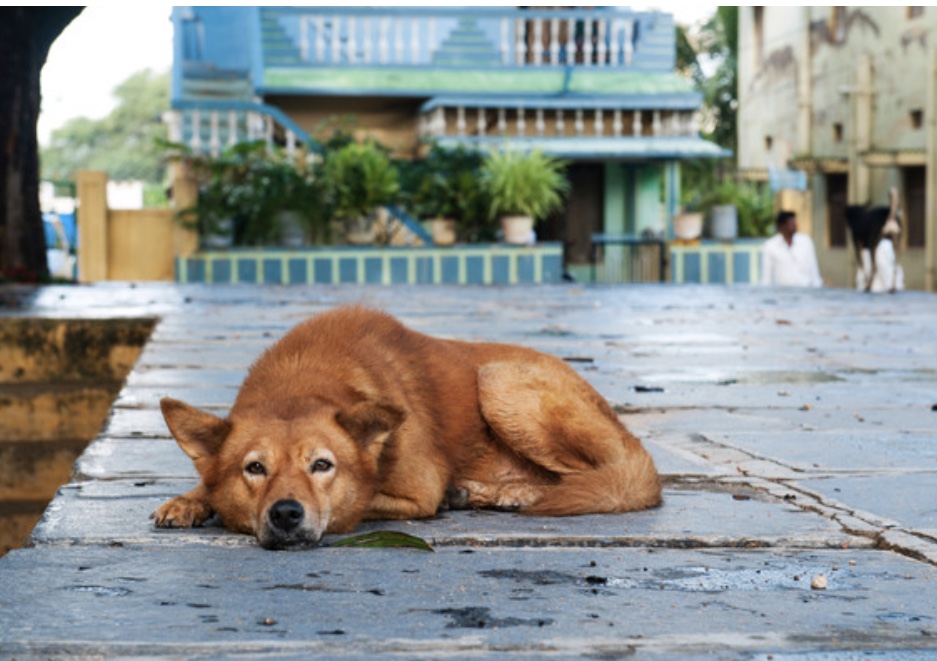
The pariah dog breed, a landrace native to its environment, dates back to 4000 years ago in hereditary lineage. The breed is rooted in a history of companionship with native aboriginal people in India, with a knack for hunting and territoriality. These dogs are responsible for the native gene pool of street dogs in the subcontinent, supplying characteristic traits of pointed ears, a curved tail and short fur. They have natural reasoning skills similar to those of wolves and coyotes, dark brown coating, and minimal hereditary defects. In villages they are found in their most natural form, their characteristics that of the original native dog. Here they have capacity to procreate freely, mating once a year from late august to mid autumn in the northern hemisphere. Litters are born in early January when the earth is dry and the air is cool. They maintain a steady population as their growth rates rise in amount. They range freely, living as commensals with humans in domestic communities. Having developed through natural selection, pariahs are hence adapted to India’s rural and urban environments. They scavenge for food alongside people, acting as members of the community and maintaining positions as friendly compatriots.
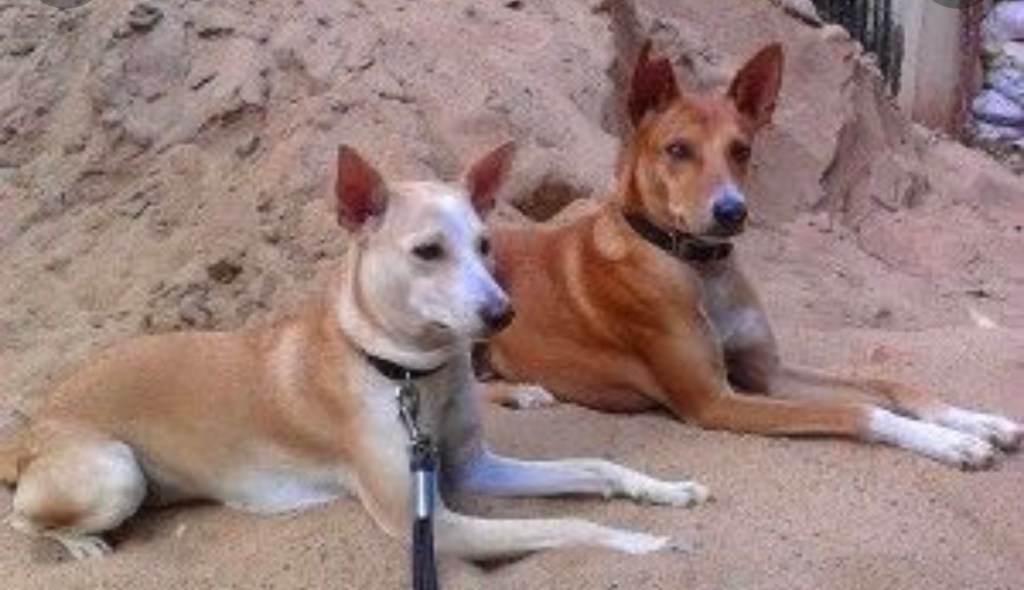
Mixed breed canines also make up a big part of the street dog population. They are a mix of the pariah dog, and European breeds of modern descent. These canines are native to locations where Western settlers had historically created colonies, bringing European breeds, which intermixed with native breeds. They are also native to urban centers, where modern European breeds mate with nativistic dog breeds. These dogs, often called mongrels, share features with European breeds such as brindles and spotted coats. They have artificially selected traits, and present a combination of native genetics with western attributes.
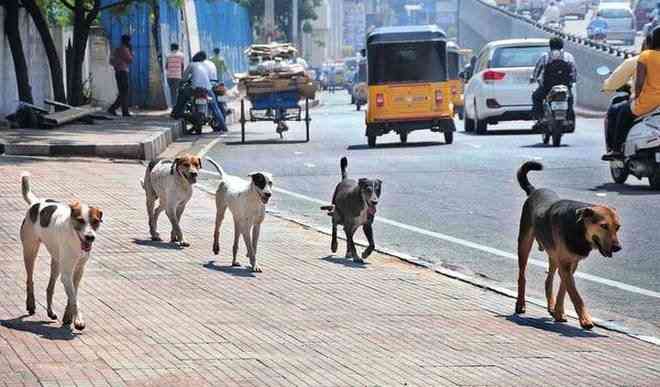
In urban centers, dogs face more difficult challenges. Attitudes towards dogs in India need to develop, as canines experience many cases of injustice. Local attitudes towards street dogs are negative, with people splashing acid on dogs’ faces and pelting rocks at them. Removing these dogs from the streets is also complicated. Indian people are not interested in adopting these native dogs, or in retaining them, resorting unfortunately to abandonment. Canines, dependent on human activity, face issues of survival based on events in civil society. Social problems, such as the Covid-19 crisis, result in Indian dogs losing their places as urban recyclists, with shopping malls and eateries shutting down keeping dogs from maintaining their niches., As recyclists, these dogs help in managing the trash problems in human environments by scavenging for food in human refuse. They lose their locational accuracy, as people pose issues of social health and a reluctancy to provide a domicile.
These strays are closely monitored by welfare organizations, managing their activity. Groups such as the Dharamsala Animal Rescue are working on aiding these populations in disease control and protection from abuse. The Bombay House, an organization controlled by the IT company Tata, has created a kennel for street dogs to take shelter. An organization responsible for protecting the safety of dogs in urban locales is the Society for Prevention of Cruelty towards Animals, recording their activity in the city centers. Organizations such as these attempt to have street animals adopted in a possibility for handling them, such as the Noida-based rescue project Kannan Animal Welfare. Here they have been able to send animals to adoptees in the United States, allowing more room to be made in clinics where street dogs can be sheltered and treated locally. Yearly, the KAW has sent about 30 to 40 dogs to be adopted in the states.
A symbol of canine habitation in the Indian region, street dogs are a spectacle in the country’s town squares and roadsides. They flank the roads with a presence of fraternity, accompanying the social experience with a curious spirit. They live within society as emblems of natural history.
Citations
Bhattacharya, A. (n.d.). The rabies crisis plaguing India’s Street Dogs is about to take a turn for the worse. Quartz. Retrieved August 19, 2022, from https://qz.com/india/2024421/cdc-ban-will-make-indias-street-dog-rabies-crisis-worse/ 
Boyko, R. H., & Boyko, A. R. (2013). Dog conservation and the population genetic structure of dogs. Free-Ranging Dogs and Wildlife Conservation, 185–210. https://doi.org/10.1093/acprof:osobl/9780199663217.003.0008 
Das, G. (n.d.). Indog. Primitive and Aboriginal Dogs Society. Retrieved August 19, 2022, from https://padsociety.org/breed-profiles/indog/
Indian pariah dog: India’s most ancient dog (breed guide). The Smart Canine. (2021, November 19). Retrieved August 19, 2022, from https://thesmartcanine.com/dog-breeds/indian-pariah-dog/
Jena, S. (2020, February 27). 2 days after president Trump leaves India, Stray Dogs & cattle are back on Ahmedabad streets. Retrieved August 19, 2022, from https://www.scoopwhoop.com/news/president-trump-leaves-india-stray-dogs-cattle-back-on-ahmedabad-streets/
 Site Title