In New Jersey, a habitat of birds exists that captures the casual viewer in natural beauty. Of these, common species are the Cardinal, the Blue Jay, the Downy Woodpecker, the Black-Capped Chickadee, and the American Robin. Populating the woods of New Jersey, such species can be seen gracing the backyards of New Jersey homes with their desire for seeds and curious natures. Flying through the tree tops of the mid-Atlantic, they enrich the ecology with active foraging and exploring behaviors. They are a vision of ornithological wonder, as their vibrancy colors the sky.
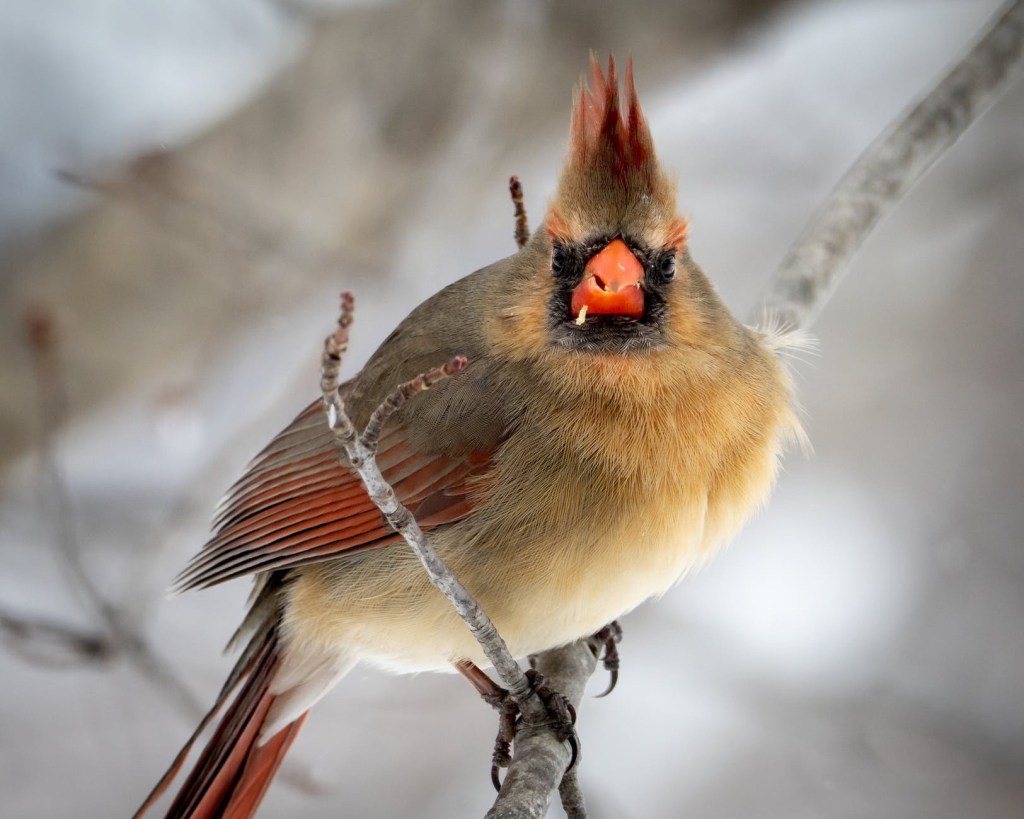
The Cardinal, a Northern, is a bright red species with a red beak and a black facial plumage, its female a light brown with patches of red and a light red beak. Increasing in population, the cardinals mate with a call response. On the nest, the female duets with the male in a courting call. The female sings for food, that the male feeds to her, as well as for long distance interaction, allowing the male cardinal to keep distance while predatory species are in range. Protected by the Migratory Bird Treaty Act, these amorous birds mate for life. Male and female cardinals express aggression shows towards intruders and others. In winter the cardinals come together in loose flocks, while in summer they disengage to fly in individual pursuits. They eat grain, as well as berries such as dogwoods and wild grapes that give them the rich crimson color of their plumage via carotenoids.
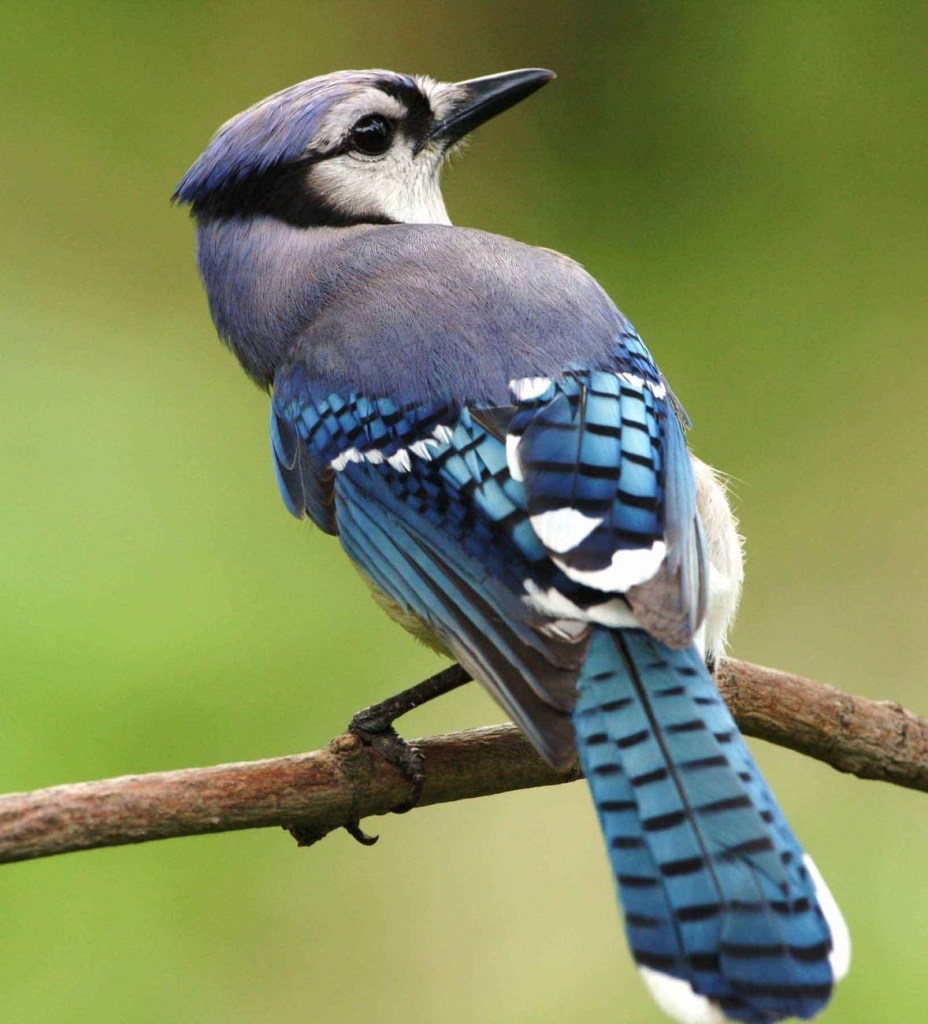
The Blue Jay has a long blue and white tail, black feathers and a black beak, with both sexes having similar coloring. It has a black band about its neck. They make nests from bark, dry grass, and leaves within trees. Females lay 3 to 5 eggs during mating season in the summer. In this time they build nests together and also feed each other. Eating insects, they exhibit appetite for many omnivorous foods. They eat sunflower seeds as well as frogs and snails. They store food in the ground, and also steal from nests of different birds. They are around 12 inches long, larger than their other avian friends. They migrate by day in seasonal flights.
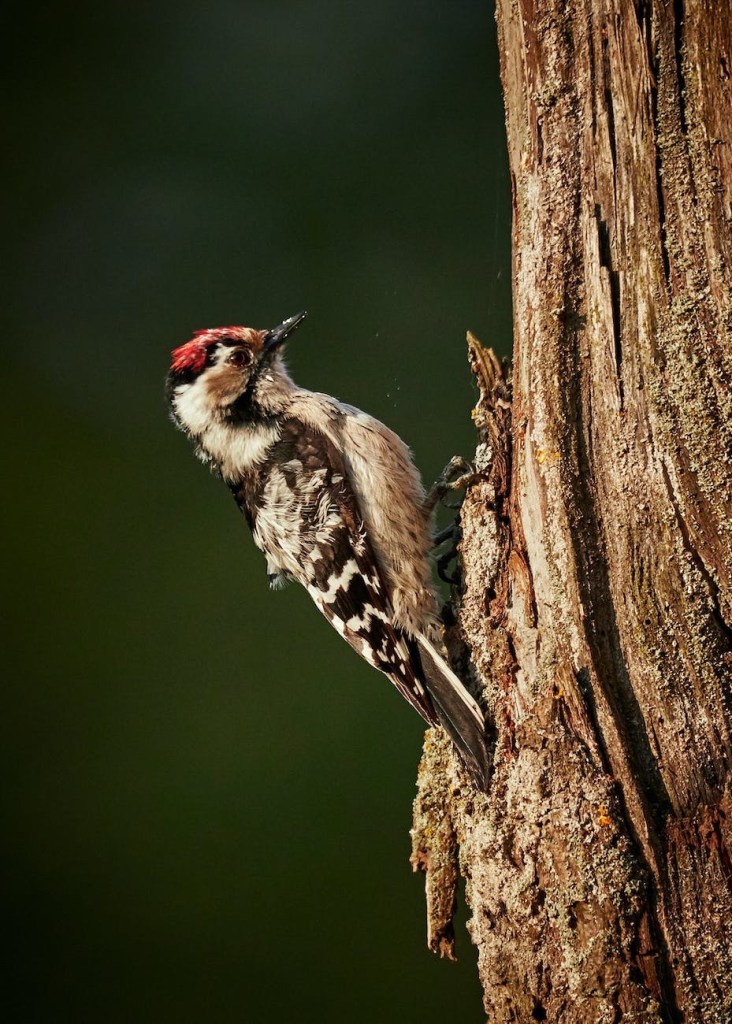
The Downy Woodpecker is another popular member of the woods of New Jersey. having a red crown and brown-white feathering, the lesser woodpecker enjoys wood lots and backyards, eating along with other woodland creatures. Its sound a “pik” noise , it digs into bark to peck for food, while also expressing a display of drumming. In winter it joins flocks of interspecies birds. Woodpeckers do this to hide from hunting animals and find more variance in food choices. With an undulating flight path, males and females of the pecker take alternative routes to find food. The oldest woodpecker to be found lived to 11 years and 11 months, if you can believe it!
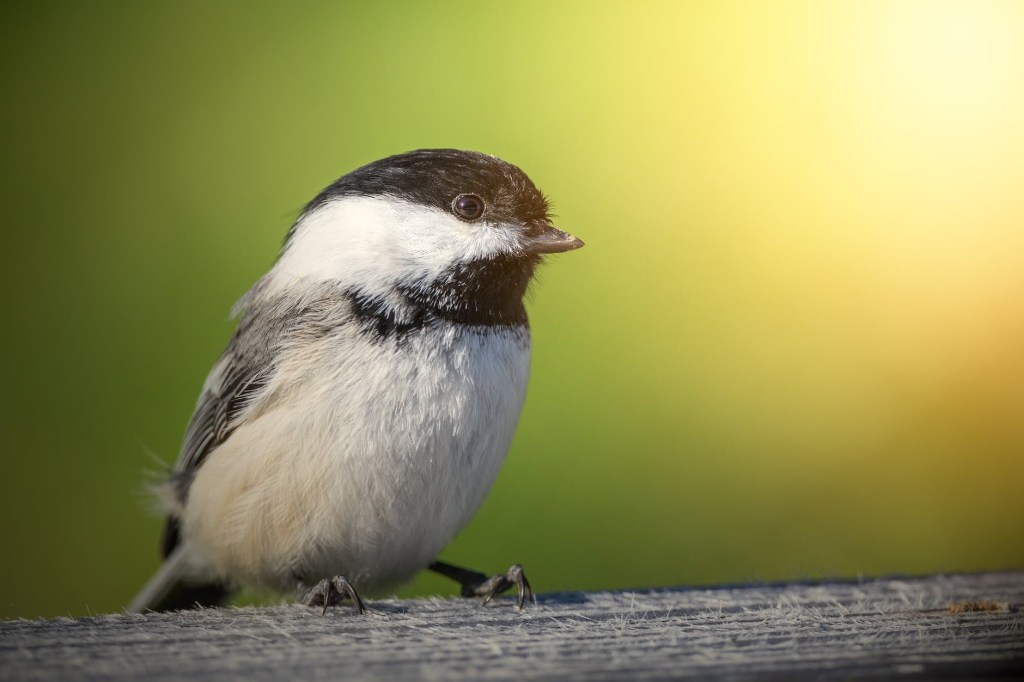
The Black-capped Chickadee has a dark layer of feathers on its crown, with a white stripe going across its face. It has a black and white top side, with a white underside and light brown flanks. It has a pointed black beak. Its sounds are a characteristic “wit-dee chicka-dee-dee.” Hopping between tree branches, Black-caps forage for insects in the tree tops, sometimes flying in the air for aerial hunts. They enjoy sunflower seeds and berries in the winter. They tend to preserve seeds in hidden places during the winter, remembering the locations for about a month before coming back. Black-capped chickadees can lengthen their chests to trap air, protecting from cold winds. They build nests in holes, out of moss and soft linings.
The Robin is a member of the Thrush family, and is known for its melodic sound. This song is head prior to dawn, and is noted for its caroling tune. Having a dark gray top side and ochre breast, the Robin has a yellow beak and a gray tail. Searching for food on the ground, robins field for earthworms, berries and bugs through lawns and shrubs. They scamper across grounds, listening for underground feed. Male and female parents both feed the young. Robins defend the nest with aggression, using both singing and fighting. During courtship, female robins are pursued by one or multiple male mates. The female does most of the nest building, using twigs and debris to form the house. The eggs are a gentle blue and are hatched in fours. Robins forage in flocks, joining in wooded areas before searching for resources. They fly in packs, following the seasonal changes in weather.
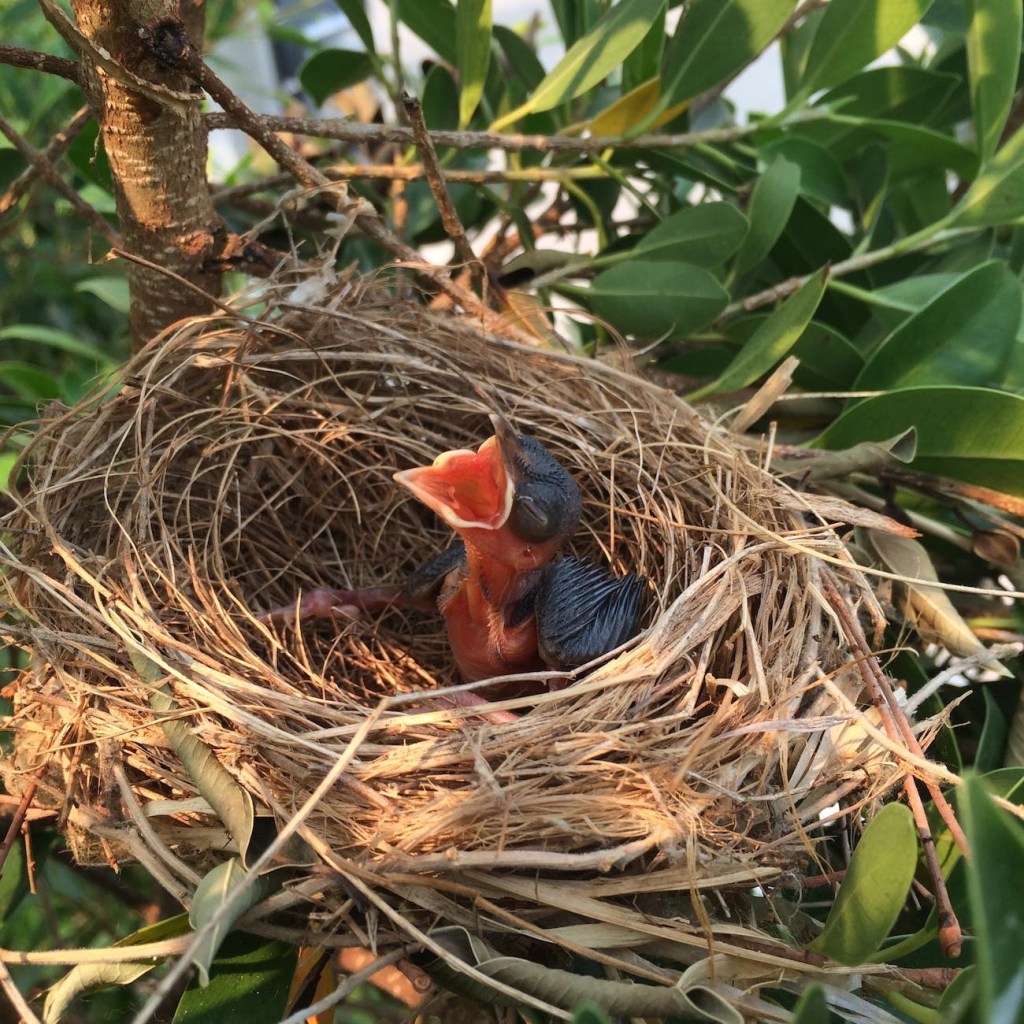
The forests of New Jersey are an ecological sensation, with birds displaying various interesting activities. They soar about the air, enlightening the viewer with sights of avian splendor in their quest for adventure. Watch them live as aerial masters of the New Jersey horizon. They are a majesty of the landscape, behaving as a guardian of the wild.
Citations
Birdwatching Tips. (2021, March 17). Popular Backyard Birds of New Jersey (with pictures). Birdwatching Tips. Retrieved August 19, 2022, from https://birdwatchingtips.com/birds-of-new-jersey/ 
Blue Jay. Audubon. (2022, May 6). Retrieved August 19, 2022, from https://www.audubon.org/field-guide/bird/blue-jay 
Dockett, E. (2018, May 17). Common types of backyard birds in the Northeast. Owlcation. Retrieved August 19, 2022, from https://owlcation.com/stem/Common-Types-of-Backyard-Birds-in-the-Northeast 
Downy woodpecker . EBird. (n.d.). Retrieved August 20, 2022, from https://ebird.org/species/dowwoo 
John J. Ardan, A. S. P. (n.d.). Birds – Native Animals of North Jersey . Birds – native animals of North Jersey rt23.com. Retrieved August 19, 2022, from https://www.rt23.com/Scenery/birds.shtml 
Northern Cardinal. New Jersey Botanical Garden. (n.d.). Retrieved August 19, 2022, from https://www.njbg.org/northern-cardinal/ 
Alerts provide an early warning system – biological strategy . AskNature . (n.d.). Retrieved August 19, 2022, from https://asknature.org/strategy/alerts-provide-an-early-warning-system/ 
Krug, A. (2022, April 8). How to stop birds from pecking on your House. Chirp Nature Center. Retrieved August 19, 2022, from https://chirpforbirds.com/how-to/how-to-stop-birds-from-pecking-on-your-house/ 
A northern cardinal bird perched on a tree branch . Pexels . (n.d.). Retrieved August 20, 2022, from https://www.pexels.com/photo/a-northern-cardinal-bird-perched-on-a-tree-branch-7248466/ 
Thompson, G. (2021, February 27). Robins Raise in a Brood – In a Hurry . BirdNote. Retrieved August 19, 2022, from https://www.birdnote.org/listen/shows/robins-raise-brood-hurry 
 Site Title